
Film cameras & lenses · Complete Guide
Buy Vintage Film Cameras from Japan: Proxy Guide for Overseas Buyers
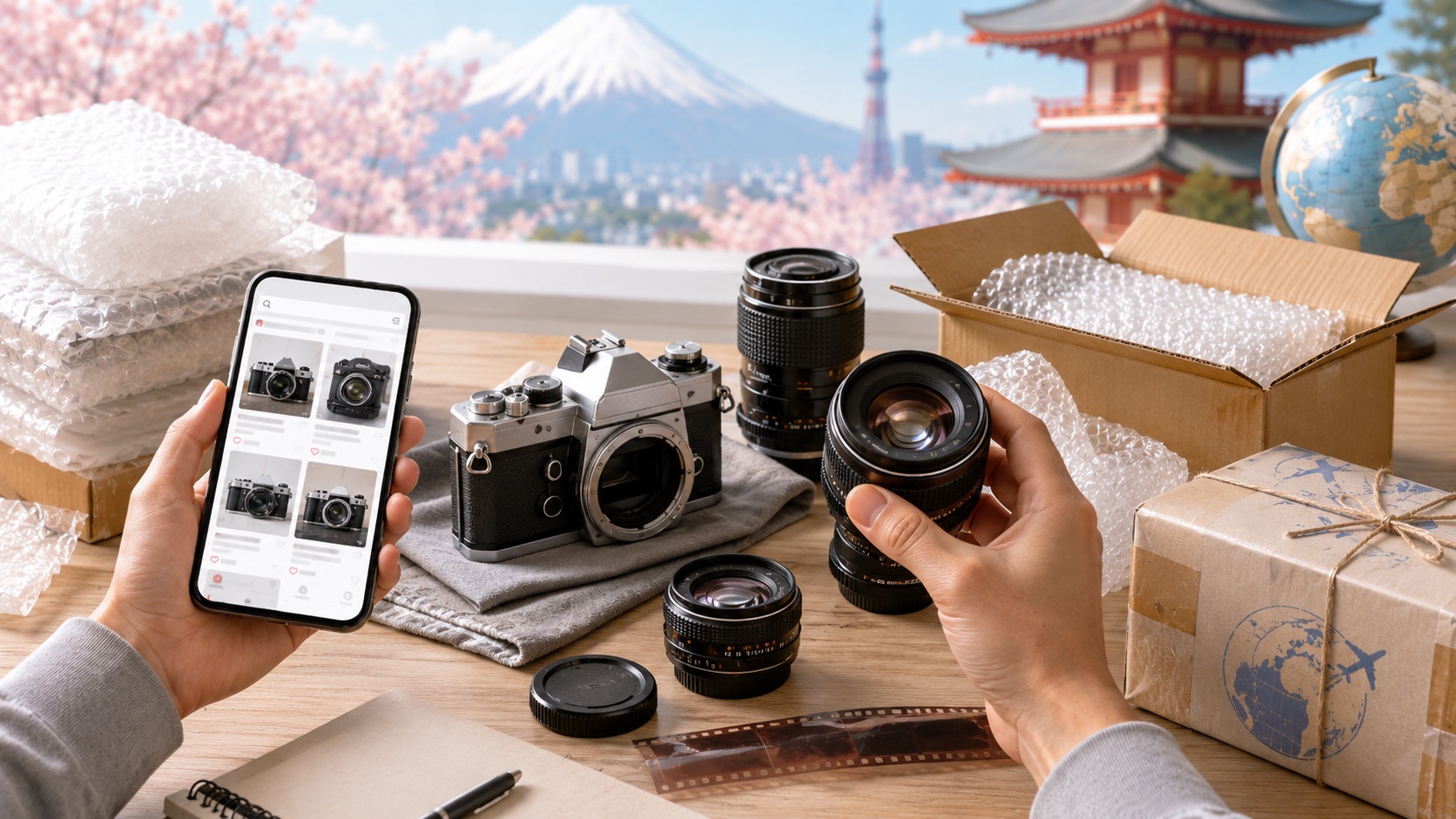
Japan is the global capital of used film cameras — endless Canon, Nikon, Pentax, Olympus, Minolta and Contax bodies and lenses, kept in superb condition and priced competitively. This is the complete 2026 guide to buying them from overseas without getting a lemon.
- Why buy film cameras from Japan
- What’s hot: SLRs, rangefinders, point-and-shoots, medium format
- Condition terms every buyer must know
- Inspecting a lens: fungus, haze, dust, oil
- Inspecting a body: shutter, meter, seals
- The “junk” trap (and when it’s worth it)
- Shipping, batteries and customs
- Best starter setups & what to budget
- FAQ
Why buy film cameras from Japan
Japan was the manufacturing heart of the camera industry, and decades later the domestic secondhand supply is unmatched in both volume and condition. Japanese owners tend to maintain and store gear carefully, sellers describe faults precisely, and prices are often lower than the inflated Western used market — especially for trend-driven point-and-shoots and desirable lenses. Whether you want a workhorse SLR or a grail compact, Japan has more of it, in better shape, more often.
What’s hot
- 35mm SLRs — Canon (AE-1, A-1, EOS), Nikon (FM/FE, F-series), Pentax, Olympus OM, Minolta. Reliable, affordable, huge lens ecosystems.
- Rangefinders — Canon and Nikon classics, Contax, and premium Leica (Japan has strong Leica stock too).
- Premium compacts / point-and-shoots — Contax T-series, Olympus mju/Stylus, Ricoh GR film models; trend-driven and now pricey, so condition matters most.
- Medium format — Mamiya, Bronica, Pentax 67, Fujifilm; big negatives, big results.
- Lenses — often the best value; vintage primes from all the above mounts.
Condition terms every buyer must know
| Japanese | Meaning |
|---|---|
| 美品 (bihin) | Beautiful condition |
| 動作確認済み | Tested and working |
| 動作未確認 | Not tested |
| ジャンク (junk) | Sold as-is, no working guarantee — buyer beware |
| カビ (kabi) | Fungus (inside lens) — serious |
| クモリ (kumori) | Haze / cloudiness in glass |
| ホコリ (hokori) | Dust (minor if small, common) |
| キズ (kizu) | Scratches |
| 絞り (shibori) | Aperture (check blades aren’t oily/stuck) |
| シャッター | Shutter (check it fires at all speeds) |
Inspecting a lens before you buy
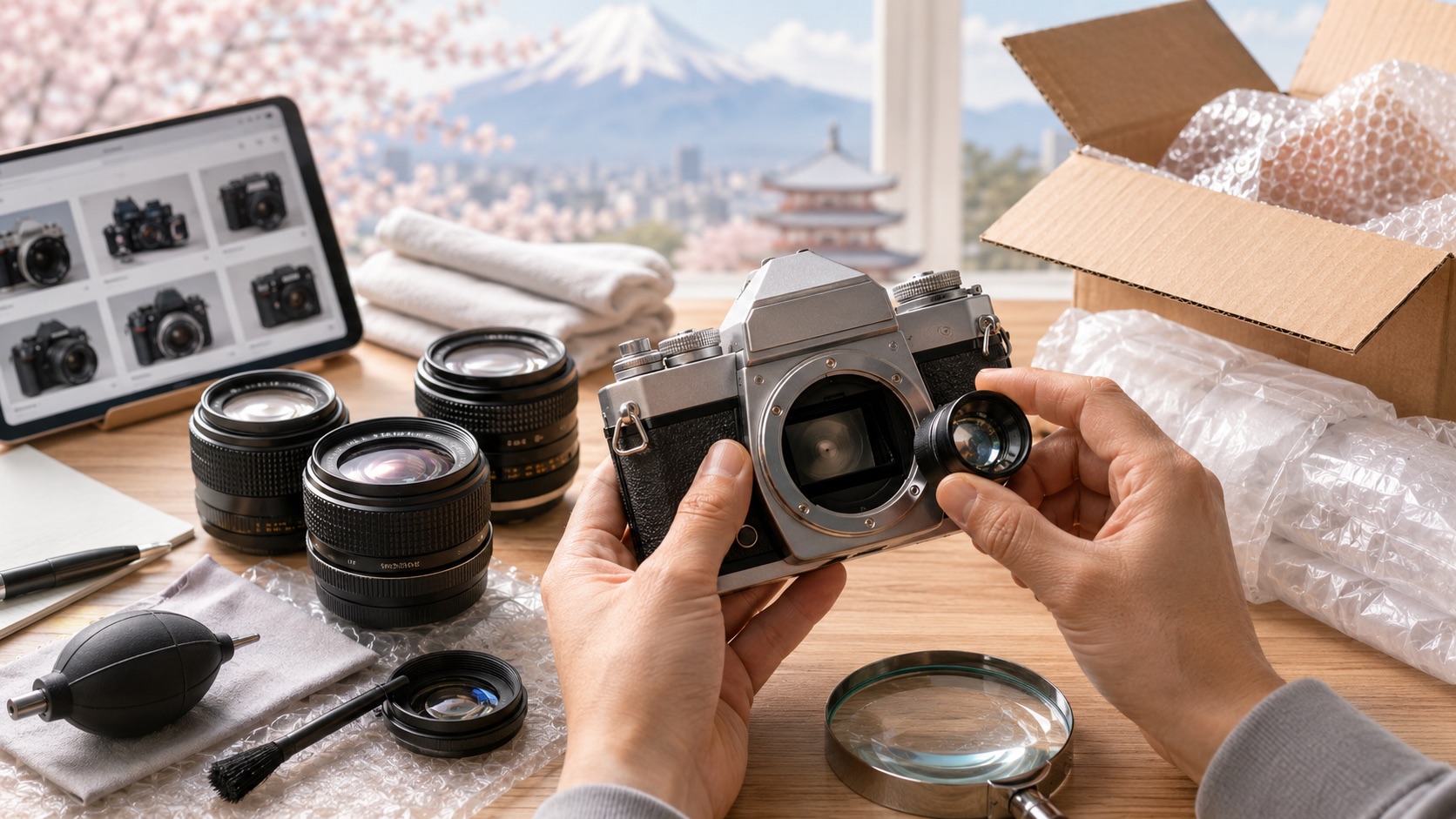
Lenses are where value hides — and where defects hide too. Ask the seller (a proxy can do this in Japanese) and request specific photos:
- Fungus (カビ) — web-like growth inside the glass; can etch coatings permanently. Avoid, or price accordingly.
- Haze (クモリ) — a cloudy film that softens images; sometimes cleanable, sometimes not.
- Dust (ホコリ) — small specks are normal in vintage glass and rarely affect images.
- Aperture oil — oily blades make the aperture sluggish; ask if it snaps cleanly.
- Focus & zoom feel — should be smooth, not gritty or loose.
- Coating scratches / separation — ask for photos with light shone through the lens, which reveals haze and fungus that flat photos miss.
Inspecting a body
- Shutter — does it fire, and at all speeds (slow speeds often stick on old cameras)?
- Light meter — working and accurate? Many vintage meters are dead or off.
- Light seals — foam seals crumble with age and cause light leaks; cheap to replace but ask if they’re done.
- Battery type — some classics used mercury batteries that are now banned; check what it needs and whether an adapter/workaround is required.
- Cosmetics — dents, brassing, LCD bleed (on later electronic models).
The “junk” trap — and when it’s worth it
Japanese sellers use ジャンク (junk) generously: it can mean “totally broken,” but also “untested, probably fine, sold cheap to avoid guarantees.” For experienced buyers who can service gear or want parts, junk bins are a goldmine. For everyone else, treat junk as not working until proven otherwise — never assume a junk camera shoots. If you want a user, buy 動作確認済み (tested working), not junk.
Shipping, batteries and customs
Total cost = item price + (domestic shipping) + proxy fee + optional services + international shipping + possible customs. Cameras need careful, padded packing — ask for protective packing. Note that loose lithium batteries can be shipping-restricted, so cameras may ship without a battery. Customs duties on cameras vary by country and are paid on arrival.
Best starter setups & what to budget
If you’re buying your first film camera from Japan, a few classic bodies are popular for good reasons — they’re reliable, well-supported by repair shops, and surrounded by affordable lenses:
- Canon AE-1 / A-1 — iconic, plentiful, with a huge FD-mount lens pool.
- Nikon FM/FE series — tough, partly mechanical, excellent F-mount glass.
- Pentax K1000 / ME — simple, durable learners’ cameras.
- Olympus OM series — compact SLRs with superb lenses.
- Minolta X-700 — feature-rich and affordable.
Two practical budget notes. First, plan for a possible CLA (clean-lube-adjust) service on vintage gear — even a “working” body often runs better after one, and it’s part of the true cost of ownership. Second, factor in film and developing, which are far pricier today than in the film era; the camera is often the cheap part of the hobby. Buying a tested, clean body with one good lens, then servicing it, usually beats chasing the absolute lowest “junk” price and gambling on repairs.
Want a human to inspect the lens first?
Get a free quote and have a person ask the seller and request light-through photos before you buy.
Get a free quoteFrequently asked questions
Why buy film cameras from Japan?
Japan has the world’s deepest supply of well-maintained cameras and lenses at competitive prices, often in excellent condition.
What does “junk” mean for a Japanese camera?
Junk (ジャンク) means sold as-is with no working guarantee — it may have fungus, haze, or a sticky shutter. Only buy junk if you can repair it or want parts.
What should I check before buying a vintage lens?
Ask about fungus, haze, dust, aperture oil and focus feel, and request photos with light shone through the lens to reveal internal issues.
Will my old camera need a special battery?
Possibly — some classics used now-banned mercury cells. Check the battery type and whether an adapter is needed before buying.