Model railways · Complete Guide
Buy Japanese Model Trains from Japan: N Gauge Proxy Guide
Japan is the home of N gauge — Kato, Tomix and Micro Ace produce exquisite models of Shinkansen, JR and private-railway trains. Here’s how to import Japanese rolling stock and track from overseas.
Why buy Japanese trains
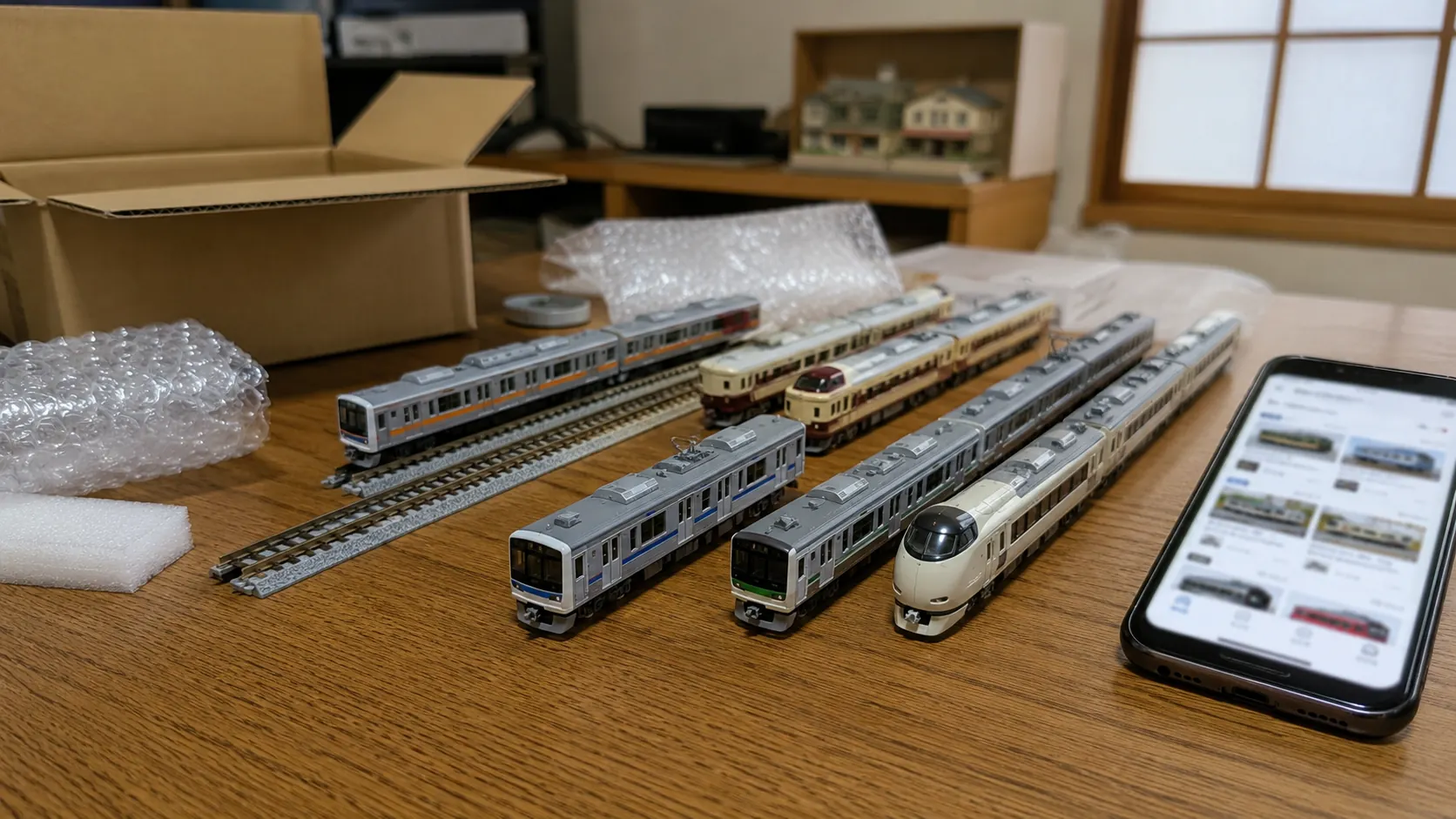
Japanese-prototype models are made by Japanese manufacturers, so they’re cheaper and far better stocked at the source — and Japan constantly issues limited runs and discontinued sets that vanish from overseas shelves. If you model Japanese railways, importing is essential; even if you don’t, the detail and value are hard to match.
Track systems, scale & power
- Scale: Japanese N is 1/150 (slightly different from Western 1/160), but they share N gauge 9mm track and run together fine.
- Track systems: Kato Unitrack and Tomix Fine Track are different roadbed systems and aren’t directly compatible — choose one ecosystem.
- Power: models run on standard DC; some support DCC. Japanese controllers expect ~100V Japanese mains, so use a suitable transformer or a controller rated for your country.
- Couplers: brands use different couplers; mixing rolling stock may need coupler swaps.
New vs used: what to check
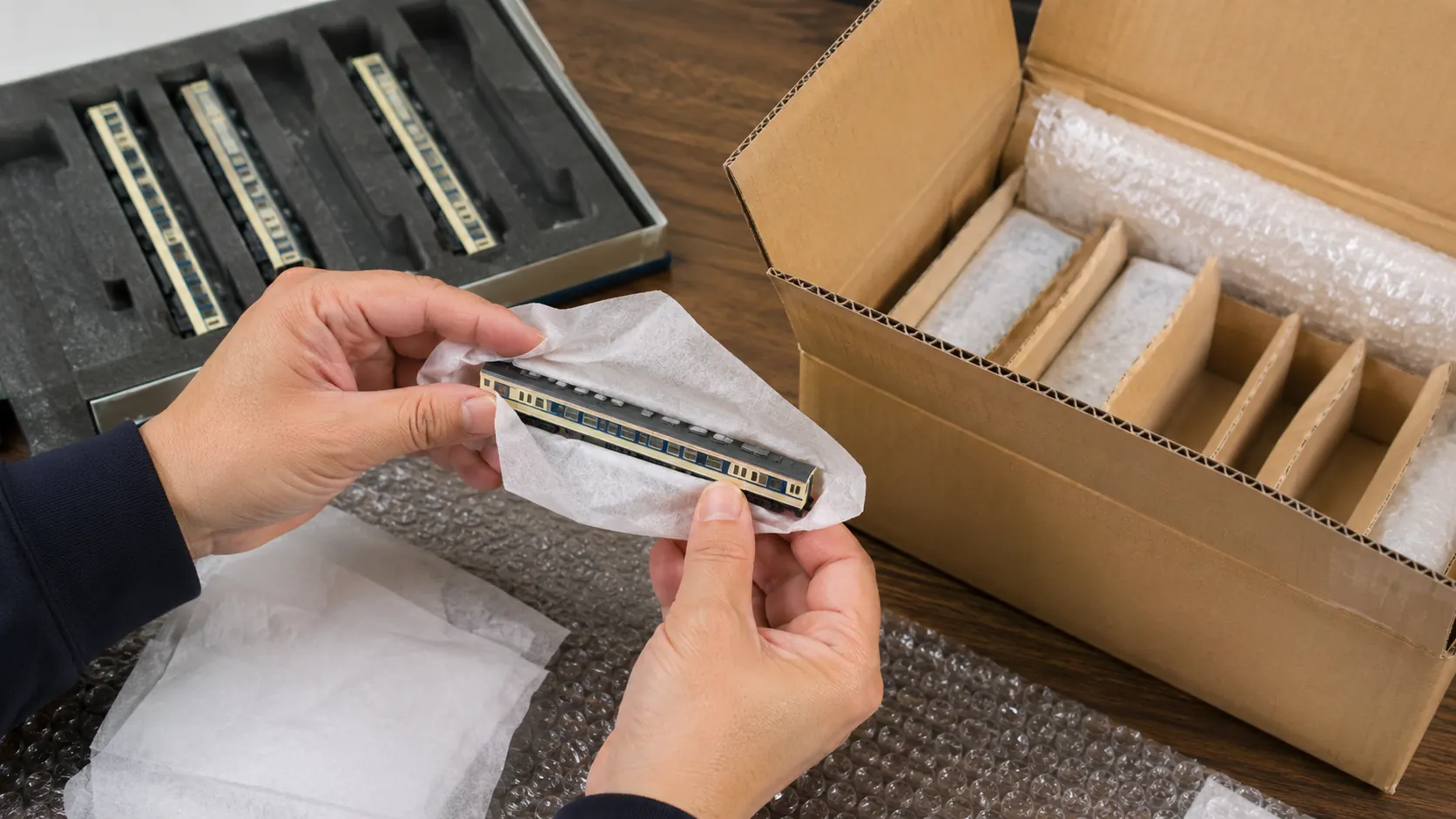
- Completeness — all cars in a set, plus couplers, stickers and instructions.
- Running condition — for used motorized cars, ask if it runs smoothly (動作確認済み = tested).
- Box & case — collectors value the original case and sleeve.
- Fragile detail parts — pantographs and small parts break easily; check photos.
Shipping, cost & customs
Total cost = item price + (domestic shipping) + proxy fee + optional services + international shipping + possible customs. Trains are delicate, so ask for protective packing; train-set boxes can be bulky (volumetric weight). Consolidating multiple items helps. Customs duties apply on arrival depending on your country.
Want a discontinued set tracked down?
Get a free quote and have a person check running condition and completeness.
Get a free quoteFrequently asked questions
Will Japanese N gauge work with my track and controller?
It runs on standard DC and N track, but brands use different track systems (Kato Unitrack vs Tomix Fine Track), and controllers need your local voltage via a transformer.
Are Japanese trains cheaper?
Usually yes for Japanese-prototype models, plus Japan has limited and discontinued runs not sold elsewhere.
Kato vs Tomix track — compatible?
Not directly. They’re different roadbed systems; pick one and stick with it.